

Breaking ground with biometrics
Breaking ground with biometrics
The UX and Biometrics Lab is at the forefront of bringing professional research tools to business students
Studying how people subconsciously respond to images, video, texts, and other media—which is externalized in ways like faster heartbeats and eye movements—is a cornerstone of contemporary marketing, user experience, and behavioral research. But business students rarely get the chance to work with biometric tools until they enter the field professionally.
At 草莓社区's Quinlan School of Business, students in both bachelor’s and master’s degree programs are using these tools and conducting their own studies in a unique and sophisticated biometrics lab, gaining expertise in an important research field and a distinct advantage in their careers.
Where brilliance meets purpose
Research Collaboration
Elevating behavioral research
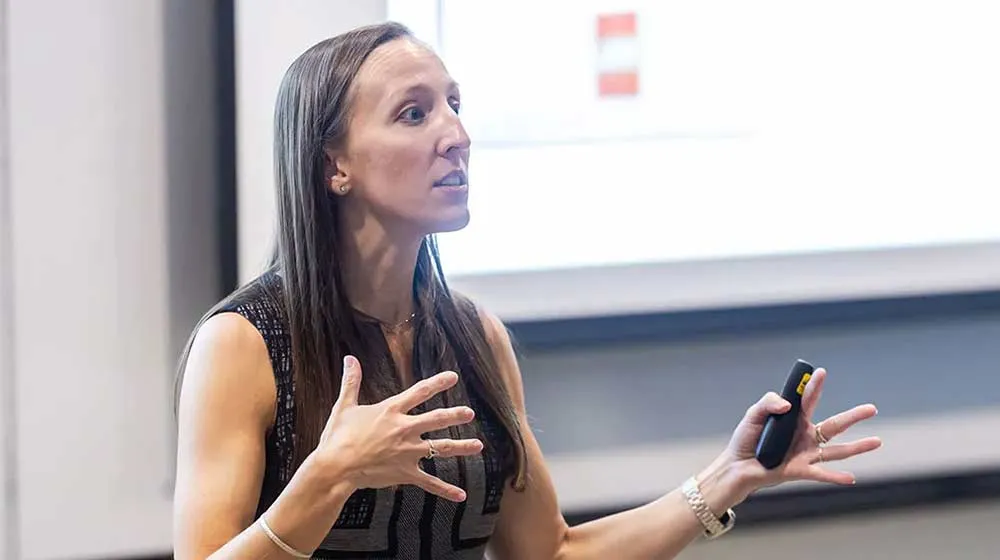
Cutting-edge business research on how people think, feel, and behave has a home at Assistant Professor Brittney Bauer鈥檚 Behavioral Lab.
Read about a hands-on research lab
Global Perspective
Transforming the world through marketing
Professor Clifford Shultz鈥檚 course taking graduate students to Southeast Asia provides the students a capstone like no other.
Read about a transformative course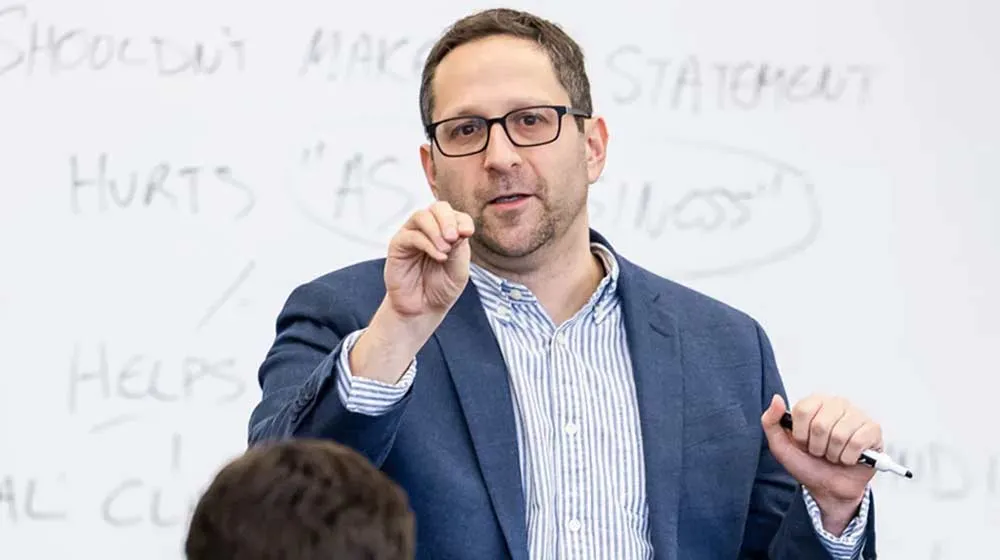
Business Ethics
Leadership tools for the real world
Quinlan鈥檚 long legacy of leadership in business ethics continues in Associate Professor Abraham Singer鈥檚 courses and research.
Read about ethics in the curriculumQuinlan’s UX and Biometrics Lab
Dinko Ba膷i膰, the founder and principal researcher of Quinlan’s , is an associate professor of information systems. A thought-leading scholar, Ba膷i膰 has published research across a wide range of disciplines, including business information visualization, biometrics, and human-computer interaction. He teaches courses in the lab in several undergraduate and graduate degree programs, including the , which is ranked #20 in the nation by U.S. News and World Report, 2025.
Ba膷i膰 says that the lab students do not just learn about the technology, they also take on concept-to-results investigations that prepare them for fruitful research and work in industry.
“Our work focuses on a different way to assess how people, users, and society interact with technology or with other stimuli by focusing on subconscious signals and physiological data that we emit during these interactions,” he explained. “Traditional research either observes, gathers data through surveys, or maybe collects secondary data."
鈥淥ur lab is different in that we compile unique data using devices that track how people pay attention and where they look, or gauge emotional engagement as shown in facial muscle movement.鈥� Dinko Ba膷i膰, Associate Professor of Information Systems and Director of the UX and Biometrics Lab
Access to cutting-edge approaches
The UX and Biometrics Lab also has equipment to measure galvanic skin response—which registers the sweat secretions which can signal arousal—and students employ artificial intelligence tools to help analyze the complex streams of data collected.
Angelika Tokarczyk (BBA ’25) was a double major at Quinlan, earning her bachelor’s degree in information systems and analytics and in marketing. Tokarczyk also worked as a lab fellow, conducting original research as well as helping student researchers and faculty researchers.

Angelika Tokarczyk (BBA 鈥�25) (left) and Dinko Ba膷i膰, associate professor of information systems and director of the UX and Biometrics Lab, discuss data insights.
鈥溾�淎ll the聽exposure to the concepts and technology was quite different than what I expected in a business curriculum. I聽didn鈥檛聽think聽I鈥檇聽be working with eye trackers, heart rate monitors,聽or galvanic skin response.鈥� Angelika Tokarczyk聽(BBA聽鈥�25)
Tokarczyk is currently studying in Quinlan’s program and also working as an IT consultant for Impact Advisors, a healthcare management consulting firm in Chicago.
The conceptual process of biometric research is one of the most important aspects of the lab, and something Ba膷i膰 emphasizes in his holistic approach to teaching and research. He says it is vital for students to learn how to decide what tools in the lab to use for a particular study, and why.
“The creativity and critical thinking that the students have to exercise are vital for getting the best results in their studies. That’s why crafting the studies with care and thinking through the process is so helpful for them,” said Ba膷i膰. “There are questions about eliminating noisy data and ensuring the signal you’re measuring captures the phenomenon you are interested in. That’s the experiential part, and they become experts rather quickly.”
Lab students advance in academics and industry
Students who have studied with Ba膷i膰 in the UX and Biometrics Lab have racked up some impressive accolades, placing their research in academic journals and traveling internationally to present their findings. Tokarczyk is co-author, along with fellow Loyola students, of a . They presented the paper at the Americas’ Conference on Information Systems forum on emerging research in Montreal and at the NeuroBusiness Conference in Croatia.
A different group of students conducted a that was published by the prestigious Journal of Consumer Marketing. Earlier this year, students involved in the lab as fellows won a top award for their and recall. In addition, in a profile published in August 2024, the Association to Advance Collegiate Schools of Business (AACSB), the most prestigious accreditor in the field, at the UX and Biometrics Lab for their research.
Students’ advanced experience in biometrics research and theory has proved advantageous in the career marketplace. Ba膷i膰 reports that UX and Biometrics Lab students have done extremely well in job interviews because of their unusual expertise in biometrics.
鈥溾�淚nterviewers are unbelievably curious when they talk to our students because their companies often don鈥檛聽do this kind of analysis.鈥� Dinko Ba膷i膰, Associate Professor of Information Systems and Director of the UX and Biometrics Lab
“Instead of grilling the applicant, they’re asking questions about their biometric experience,” said Ba膷i膰. “It shifts the power dynamic of the interview, and gives the students confidence to verbalize what they know.”
The application of biometric methods within human-computer interaction research and business practice is still in an early stage of development. Ba膷i膰 says that in providing graduate and undergraduate students hands-on experience in these developing disciplines, Quinlan is providing a unique educational opportunity. “It’s technology that not many people have access to, and with it, these students are discovering new knowledge.”