

Focus on Teaching and Learning
Focus on Teaching and Learning
Sponsored by the Center for Faculty Development
Creating Space | August 13, 2026 | WTC
At the start of The Spiritual Exercises, Ignatius offers what has become known as the “Ignatian Presupposition”—a call to approach others with curiosity and compassion. Often symbolized as a plus sign (+), “Ignatian Presupposition” asks educators to create space by leaning in, listening, and making room for what we value most in teaching and learning.
Join colleagues at this year's Focus on Teaching and Learning conference to get and give inspiration for new ways to create space so that all students and educators can flourish.
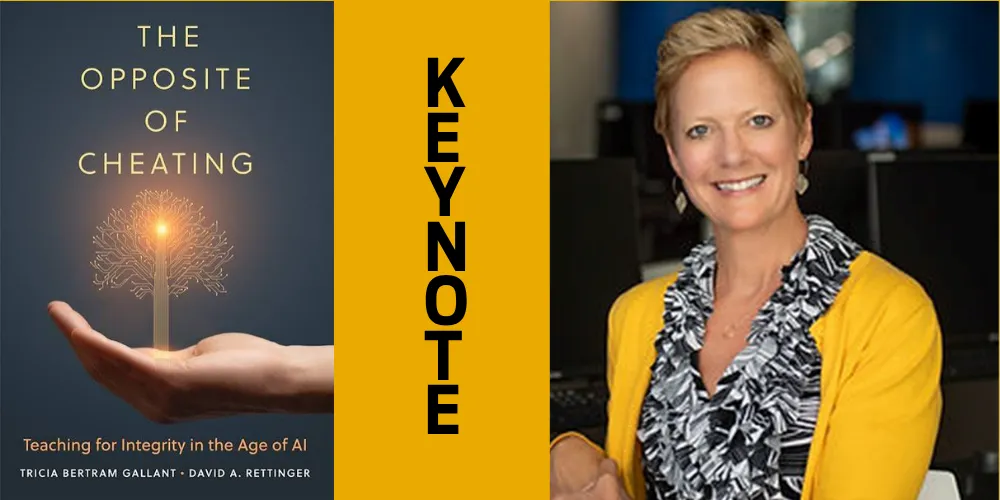
Featuring Tricia Bertram Gallant
Co-Author of "The Opposite of Cheating: Teaching for Integrity in the Age of AI" (2025)
An internationally recognized expert in academic integrity and ethics in higher education. As the Director of the Academic Integrity Office & Triton Testing Center at the University of California, San Diego, she leads innovative efforts to cultivate integrity-centered learning environments and assessment practices. With a career spanning nearly two decades, Dr. Bertram Gallant has advised universities, policymakers, and global organizations on fostering cultures of honesty and accountability in the face of emerging challenges鈥攎ost recently, the integration of鈥疓enerative AI in education.
Schedule-at-a-Glance
We will convene on the Water Tower Campus in Regents Hall, 16th Floor, Lewis and with breakout sessions in Corboy.
鉃� 8:30 AM: Registration & Breakfast
鉃� 9:00 AM: Opening Session
鉃� 10:00 AM: Breakout Sessions 1
鉃� 11:00 AM: Breakout Sessions 2
鉃� 12:00 PM: Keynote & Lunch
鉃� 2:00 PM: Breakout Sessions 3
鉃� 3:00 PM: Closing Session & Mixer
Conference Program & Materials
.
8:30 AM: Registration & Breakfast - Regents Hall
Breakfast and registration will start at 8:30 AM in Regents Hall, on the 16th floor of Lewis Towers.
9:00 AM: Opening Session - Regents Hall
Regents Hall (16th Floor, Lewis) 鉃� Ignatian Presupposition: Living from Historical Roots in Our Contemporary Classrooms 鉃� Interactive Presentation
Presented by Lauren Schwer and Patrick Gilger (草莓社区)
Description: By exploring the historical trajectory and usage of the presupposition, participants will identify current expressions of how this element of Ignatian spirituality can be an asset in creating classrooms of belonging, respect, and regard. Through historical accounts, personal anecdotes, and invitation for reflection on one’s own experiences in the classroom at a time mired in complex tension and polarization, the presupposition invites a depth to Ignatian pedagogy necessary for Jesuit education in the 21st century.
10:00 AM: Breakout Sessions 1 - Regents Hall and Corboy
Regents Hall 鉃� Sustainability in Teaching for Justice and Efficacy 鉃� Workshop
Presented by Aaron Durnbaugh, Lara Smetana, tavis d. jules, Aana Marie Vigen, Karen Schauwecker, Brook Abegaz, Laura Brentner (草莓社区)
Description: This interdisciplinary workshop will feature eight faculty and academic staff sharing their lessons on incorporating integral ecology concepts (Laudato si') into the classroom. Participants should come to the session with a course or class session in mind.
Corboy 202 鉃� Lightning Talks
- Prompting Inclusion: Creating Space for AI-Mediated UDL Practice - Trischa Duke (University of Illinois Chicago)
- Critical Conversations, Meaningful Connection: AI Communication Role Play in Education - Emily Chin, Lise Hauser (草莓社区)
- Intellectual Substitution and Student Agency - Theodore Barnes (草莓社区)
- Where Does Core Learning Go? Connecting Math to Disciplines - Gauree Kiran (Loyola university Chicago)
Corboy 203 鉃� It Ain’t Just An Add-On: Arts, Wellness, and Action 鉃� Interactive Presentation
Presented by Lauren DeJulio Bell (University of Illinois Chicago)
Description: This session centers on engaging lessons that foster creative expression and interactive teaching approaches. We'll immerse ourselves in poetry and theatre to develop our understanding of mental health/wellness in an arts-driven classroom. We'll be up on our feet with theatre games, along with writing opportunities, to dig into self, community, and language with an emphasis on culturally responsive creative literacy and action.
Corboy 205 鉃� Creating Space: A Design Thinking Approach to Co-Creating Classrooms 鉃� Workshop
Presented by Stacy Neier Beran and Susan Ries (草莓社区)
Description: Classroom space is rarely neutral. Its layout, lighting, furniture, and technology shape what teaching and learning can actually look like in practice. This workshop invites participants into a structured listening experience modeled on Project Cannonball, a student-generated design thinking project exploring what Loyola's campus community needs from its learning spaces. Working on Miro, participants move through three phases: reflecting on their own classroom experience, mapping empathy for a student whose needs are not fully met, and testing an aspirational prototype. Participants leave with a reusable digital template and the knowledge that what they produce here contributes to a real and ongoing campus conversation.
Corboy 525 鉃� Using Qualtrics and AI for Formative Adaptive Assessments 鉃�&苍产蝉辫;Workshop
Presented by Kevin Mazor (草莓社区)
Description: Low-stakes formative assessments combined with effective feedback have been shown to enhance student learning and understanding, especially when students take the assessment multiple times. During this workshop, participants will learn how to: (1) use Qualtrics to create adaptive assessments that provide students with feedback based on their performance, (2) store students’ results in a database so that future attempts can adjust based on previous performance, and (3) incorporate generative artificial intelligence (AI) into assessments to provide study strategies based on student performance and class content. Participants will need a computer connected to the internet to fully participate.
Corboy 526 鉃� Making Space for Information Literacy in Course and Curricular Design 鉃� Interactive Presentation
Presented by Sally Thorngate and Monique Clark (草莓社区)
Description: The information environment we and our students inhabit is ever-changing, shaped by algorithms, polarization, personalization, AI, misinformation, and a crisis of trust in expertise. In this session, we’ll explore what information literacy means in this moment, reflect on what researchers (and our students) are telling us, and think together about how to respond with a distinctly Jesuit approach. We'll share ideas about ways of making space for information literacy in course and assignment design, the CORE curriculum, and departmental curricula, with the aim of preparing graduates to be people for and with others in an increasingly complex information world.
11:00 AM: Breakout Sessions 2 - Corboy
Corboy 202 鉃�&苍产蝉辫;Lightning Talks
- Camp Wolfie: Collaborative Learning about Autism Spectrum Disorder - Joanne Dunderdale, Nancy Raschke Deichstetter, Carol Kostovich, and Elizabeth Szwajnos (草莓社区)
- Listening, Reflection, and Formation Through Community of Practice - Kevin Pietro (草莓社区)
- Opportunities to Teach Character Virtues to Undergraduates - Michael Burns (草莓社区)
Corboy 203 鉃� This is Where We Meet 鉃� Workshop
Presented by Natalia Valencia (草莓社区)
Description: Building a sense of community is a common goal in teaching, yet it rarely happens by chance. It takes time, effort, and intentionality. To address the question, How does community show up in the classroom?, we must consider how teaching practices and learning environments shape group dynamics. This workshop explores how to cultivate connection and engagement by shifting the assumption that all learning must happen within the classroom. Drawing on study abroad and co-curricular initiatives, we will examine how interaction, aligned goals, and productive discomfort in non-traditional settings positively impact academics by deepening ties between students, instructors, and learning.
Corboy 205 鉃� Composition of Place: Ignatian Imagination in Healthcare Ethics Cases 鉃旾nteractive Presentation
Presented by John Stys (草莓社区)
Description: Healthcare ethics cases are typically presented in the classroom as stripped-down vignettes optimized for principlist analysis. Students reason about the case rather than from within it, producing discussion that is technically sound but lacking moral depth. This session introduces a pedagogical adaptation of Ignatius's "composition of place" from the Spiritual Exercises. Applied across courses that rely on case study analysis, this approach invites students to engage cases through the senses before moving into analysis.
Corboy 525 鉃� Co-Creating Collaborative Learning Spaces 鉃� Interactive Presentation
Presented by Veronica Womack (Northwestern University)
Description: This interactive session invites participants to engage in a co-curricular approach to cultivating inclusive, collaborative learning spaces among student peer leaders. This session will be grounded in mindfulness, critical consciousness, and intercultural pedagogy. Drawing on research on high-impact practices and peer mentoring, participants will explore how collaborative approaches—such as group work and dialogue across difference—enhance learning and belonging. Through reflection, multimedia engagement, and discussion, attendees will examine how social identities and marginalization shape learning environments and identify strategies to foster equity, reduce isolation, and strengthen community. Participants will leave with practical tools for cultivating supportive, responsive, and transformative peer learning experiences.
Corby 526 鉃� Who's in the room via the ADDRESSING Model 鉃� Workshop
Presented by Devona Alleyne (草莓社区)
Description: Students often start courses carrying multiple characteristics that shape how on they engage in coursework and with one another. Yet, learning spaces often emphasize mastery of material without first inviting opportunities for students to examine the lens through which the lessons come. This workshop presents the use of Pamela Hayes' ADDRESSING model as an introductory classroom activity designed to encourage and foster belonging, critical reflection, and meaningful engagement from the first day of class. The activity reveals the layers of identity for all people in the room rather than the flattening that often occurs from unnamed but perceived differences based of phenotype. Grounded in a teaching philosophy that views education as multidirectional, transformative, and relational, this presentation demonstrates how structured identity reflection can deepen classroom dialogue in which learners feel seen and valued.
12:00 PM: Lunch & Keynote - Regents Hall
Regents Hall (16th Floor, Lewis) 鉃� Lunch Begins at 12:00 PM 鉃� Keynote Begins at 12:30 PM
Featuring Keynote Speaker Tricia Bertram Gallant
Co-Author of "The Opposite of Cheating: Teaching for Integrity in the Age of AI" (2025)
An internationally recognized expert in academic integrity and ethics in higher education. As the Director of the Academic Integrity Office & Triton Testing Center at the University of California, San Diego, she leads innovative efforts to cultivate integrity-centered learning environments and assessment practices. With a career spanning nearly two decades, Dr. Bertram Gallant has advised universities, policymakers, and global organizations on fostering cultures of honesty and accountability in the face of emerging challenges—most recently, the integration of鈥疓enerative AI in education.
2:00 PM: Breakout Sessions 3 - Corboy
Corboy 202 鉃�&苍产蝉辫;Lightning Talks
- Making Space for Cura Personalis Through Brief Classroom Activities - Julie Darnell (草莓社区)
- Be Kind! Some Pedagogy of Relation & Care - Daniel Burke (草莓社区)
- Cura Personalis Advising: Reimagining Longitudinal Medical Student Advising - Cynthia Chaidez (草莓社区)
Corboy 203 鉃�&苍产蝉辫;Creating Space For Incarcerated Students: A Collaborative, Approach to Immigrant Justice & Learning 鉃� Interdisciplinary Roundtable
Presented by Elizabeth Webster and Richard Kim (草莓社区)
Description: This discussion will center on how to create space for non-traditional students, specifically incarcerated students. We will consider how to bridge the gap between carceral spaces and Loyola classrooms through a University-wide, jail education program.
Corboy 205 鉃�&苍产蝉辫;Making Every Voice Visible: Collaborative Digital Spaces for Belonging 鉃� Workshop
Presented by Nur Karatas (草莓社区)
Description: How can collaborative digital spaces help create classrooms where more students feel comfortable contributing? This interactive workshop explores how digital tools can foster belonging, encourage participation, and support cura personalis through reflection, connection, and student voice. Drawing on examples from my first-year writing and core literature courses, participants will experience and discuss activities that build community, invite reflection, and create space for student check-ins and mindful engagement. We will also consider how these practices can be adapted across disciplines. Through examples using Padlet, Microsoft Whiteboard, and Mentimeter, the workshop highlights practical ways to encourage participation and create more connected learning environments.
Corboy 525 鉃� Leading a Culture of Assessment: Giving and Receiving Feedback 鉃� Workshop
Presented by Rachel Shefner, Eilene Edejer, and Laura Gawlinski (草莓社区)
Description: There is evidence of a growing culture of assessment at Loyola. Faculty are becoming more familiar with developing learning outcomes and curriculum maps and have even reported evidence that engaging in assessment processes has led to adjustments in the way they offer academic programs to students. Cultivating this emerging culture requires developing a common understanding of our goals. Peer feedback provided to academic units on their annual academic assessment reports can facilitate common understanding. Providing actionable peer feedback deepens the understanding of both the feedback provider and the receiver. Join us as we practice delivering and receiving feedback!
Corboy 526 鉃�&苍产蝉辫;Crossing Borders, Building Bridges 鉃� Interdisciplinary Roundtable
Presented by Katherine Walts, Ruth Kafensztok, Maria Vidal De Haymes, Amy Nelson Christensen, Amy Blair (草莓社区)
Description: Rooted in the Ignatian tradition of cura personalis and a commitment to justice, this roundtable convenes faculty from the newly launched Holistic Immigration Hub pilot to examine how interdisciplinary collaboration advances systemic change for one of the most pressing social challenges of our time - immigrant justice. Panelists from law, public health, social work, and education will identify current issues within their respective fields, and discuss how cross-disciplinary engagement can produce impact that no single field could achieve alone. Grounded in the Jesuit commitment to educating the whole person and serving the common good, this conversation explores how interdisciplinary partnership can strengthen teaching, scholarship and social impact.
3:00 PM: Closing Session and Mixer - Regents Hall
Join us back in Regents Hall (Lewis Towers 16th floor) for our closing session!
Location and Transportation
The conference takes place at 草莓社区's Water Tower Campus, just west of Michigan Avenue.
Non-Loyola guests and colleagues from HSC should check in with the security desk when entering buildings. We provided them with a list of registrant names.
Location for Registration, Keynote, and Mixer
Regents Hall, 16th Floor, Lewis Towers
111 E Pearson St, Chicago, IL 60611
Location for Breakout Sessions
Corboy Law Center, 2nd and 5th Floors
25 E Pearson St, Chicago, IL 60611
Transportation & Parking
We recommend taking public transportation if possible. We do not have a contract with the Loyola shuttle.
Red Line Stop: Chicago (5 minute walk to Lewis Towers)
Bus: From Lake Shore Campus, take the 147 to Michigan and Pearson (2 minute walk to Lewis Towers)
Parking: There are a number of garages near the Water Tower Campus
- (One Superior Place)
- Fordham Garage
- 100 W. Chestnut Garage
Call for Proposals
Proposals due by June 15, 2026 | Decisions by July 1, 2026
We invite you to bring your plus sign to the August 2026 Focus on Teaching and Learning conference. How do you cultivate conditions of engagement, belonging, and growth so students can flourish? What curricular and co-curricular approaches have had a lasting impact on your students? Share the pedagogical practices and moments that reflect your deepest values as an educator.
Need a starting point? Consider how you create space for
鉃� The Ignatian Pedagogical Paradigm
鉃� Community-building
鉃� High-impact Practices
鉃� Sustainability
鉃� Active Learning
鉃� Feedback
鉃� Assessment of Student Learning
鉃� Welcoming Student and Instructor Identities
鉃� Universal Design for Learning
鉃� Risk-taking
鉃� Play
鉃� Cura Personalis
鉃� Disagreement
鉃� Generative AI
鉃� Or anything else you value in teaching, learning, mentoring, and advising contexts?
Session Types
Workshop (45 minutes)
Participants don’t just hear about your practice—they experience it! Workshops are active, immersive sessions in which participants create, build, or experiment with a pedagogical practice or concept. The goal is for participants to leave with something concrete they can readily implement in their own teaching and learning contexts.
Lighting Talk (5-7 minutes)
Got a bold idea that deserves an audience? A lightning talk is a focused, high-energy presentation designed to spark curiosity and inspire new thinking. You share one powerful idea about an innovative, novel, and inspirational approach you take to teaching and learning. Multiple lightning talks will be grouped into a single session, followed by open discussion among presenters and audience.
Interdisciplinary Roundtable (45 minutes)
What happens when multiple disciplines sit at the same table? This fishbowl-style session brings together panelists from different academic disciplines to explore a shared theme, topic, or issue through their distinct lenses. Panelists open with brief introductions, then work through a set of prepared questions designed to surface genuine exchange and model productive perspective-shifting. The audience observes and joins the conversation at the end for reflection and feedback.
Interactive Presentation (45 minutes)
More than a talk, less than a workshop, an interactive presentation weaves together short presentations or discussions with structured audience engagement such as demonstration, discussion, application, feedback, group and individual work, and/or role-playing. The result is a presentation where participants are active contributors.
Proposal Instructions
Proposals will be reviewed for alignment with
鉃� conference theme;
鉃� session type;
鉃� Loyola’s mission and values; and
鉃� relevant research and scholarship.
The proposal form will ask for the following information:
- Name of Session Proposer. For multi-presenter sessions, select the person who will be the main point of contact.
- Name(s) and Email(s) of Additional Presenters. If applicable.
- Session Type: Workshop, Lightning Talk, Interdisciplinary Roundtable, or Interactive Session.
- Session Title: No more than 10 words.
- Session Abstract: No more than 100 words. If your proposal is accepted, the session abstract will be used in the program, so write to attract your audience and to help them understand what to expect.
- Session Outline: No more than 500 words. Provide a plan for how you will structure your session within the allotted time (5-7 minutes for a lightning talk and 45 minutes for all other session types). Use the session definitions for guidance on what to include and prioritize in your plan. For example,
- For workshops and interactive sessions, what activities will you incorporate?
- What questions will you discuss and in what order for an Interdisciplinary Roundtable?
- What is the big idea you are sharing in the lightning talk and what points do you want to make to support it?
- Reference List: Provide at least three scholarly or research-based sources informing your session.
Focus on Teaching and Learning from 2007-Present
The 草莓社区 bi-annual Focus on Teaching & Learning (FOTL) conference is dedicated to the belief that as educators, we can grow and develop by learning through one another. We seek to contribute to a faculty and staff life that involves active scholarship, candid and vibrant collaboration, and innovative activities that reflect the University’s mission. Our hope is that FOTL can support faculty activity at all stages of development, and that work begun through this gathering can continue in myriad ways in faculty life.